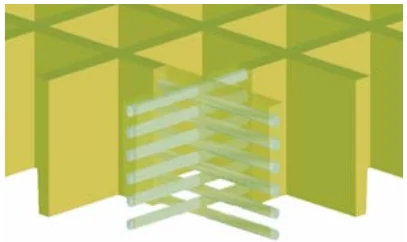
Molded Grating
- Interwoven reinforcement supports loads in both directions.
- Review cutouts and support details before fabrication.
- Concave and grit-top walking surfaces are available.
- Catalog depths range from 1 to 2 inches.
Material Selection
Fiberglass-reinforced plastic combines glass reinforcement with a resin matrix. For walkways and platforms, the result is a grating material that does not rust and can be specified for a range of exposure conditions.
Compare the complete design, not only the material. Support spacing, surface, fire requirements and local codes remain project-specific.
| Consideration | FRP Grating | Steel Grating |
|---|---|---|
| Corrosion | FRP does not rust. Resin compatibility still depends on the chemical, concentration and temperature. | Carbon steel needs a suitable protection system in corrosive environments. Stainless steel has different performance and cost considerations. |
| Maintenance | There is no steel substrate to repaint for rust protection. Inspect the surface, fasteners and panel condition regularly. | Coatings, cut edges and areas of damage may need inspection and repair. |
| Weight | Published panel weights allow handling and support loads to be assessed for the chosen configuration. | Compare the actual steel specification at the same span and design load; there is no universal weight ratio. |
| Installation | Mechanical clips secure panels to the supports. Field cutting requires approved tools, dust control and edge sealing. | Fastening or welding depends on the design and applicable site procedures. |
| Electrical properties | The glass and resin system differs from conductive metal. FRP is not a substitute for an electrical safety or grounding design. | Metal grating conducts electricity; bonding and grounding are part of the electrical design. |
| Fire & temperature | The catalog lists ASTM E84 Class 1 for standard resin systems. This is not a structural fire-resistance rating. | Steel is noncombustible, but fire and elevated temperatures can affect its structural performance. |
Use the configuration-specific load tables to check the required span and deflection. Neither construction is suitable for every project.
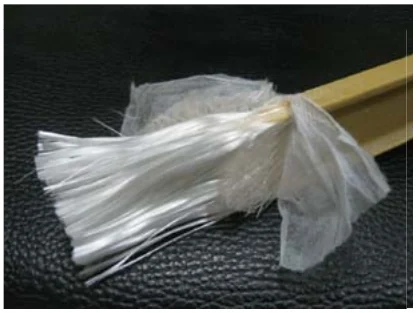
Type V vinyl ester, Type I isophthalic polyester and Type O orthophthalic polyester cover different exposure requirements. Check the published chemical guide, then confirm mixtures, cleaning cycles and temperature limits before ordering.
Compare Chemical Resistance →Send the support layout, load requirements and operating conditions.